
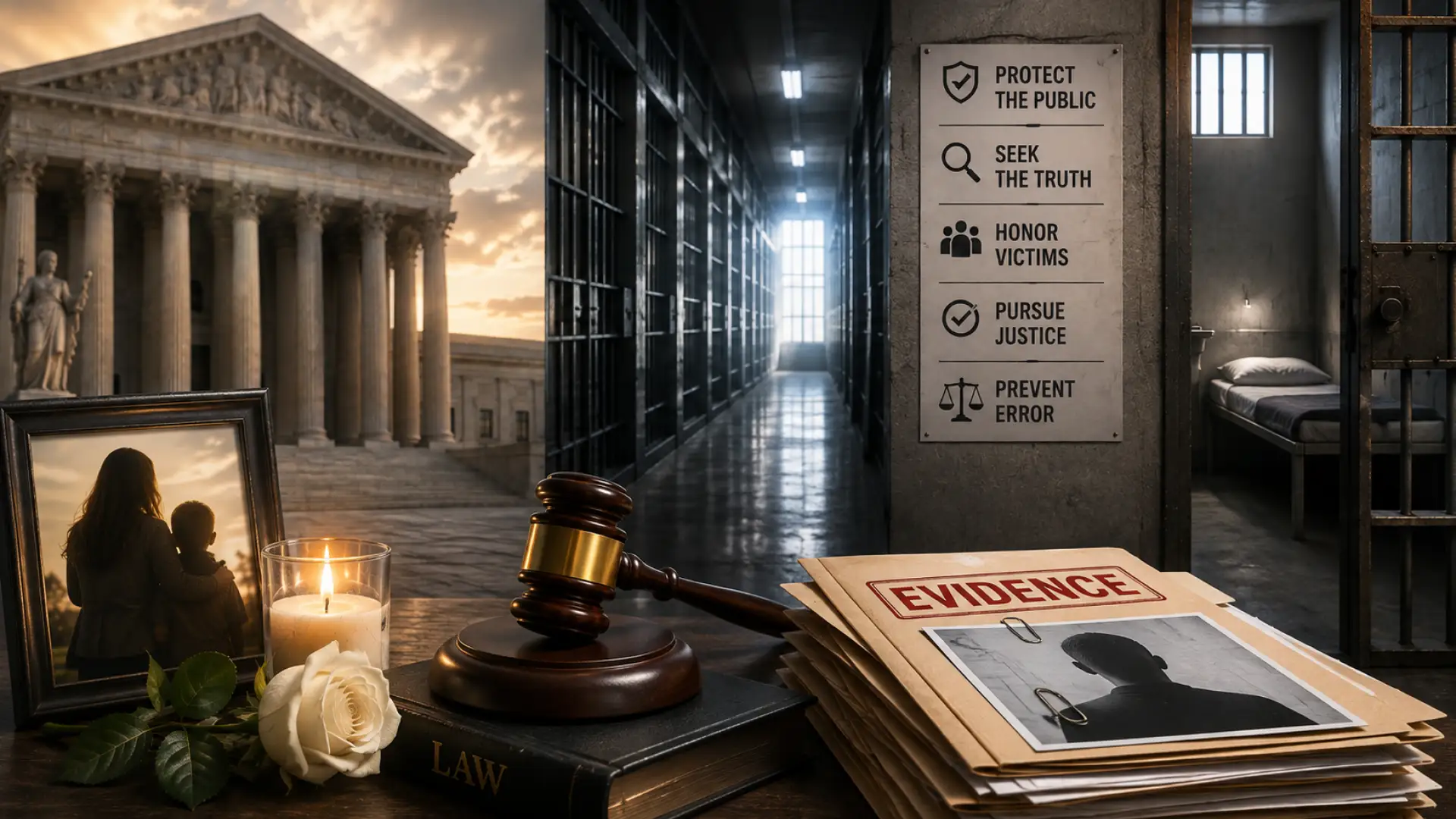
An opening proposal for public discussion
Some crimes are so cruel that imprisonment may appear insufficient. When a person deliberately murders a child, kills multiple people, tortures a victim, or commits terrorism, many citizens believe that person has surrendered the right to live. Others believe government should never deliberately take a human life, regardless of the crime.
My starting position would replace the death penalty with life imprisonment without the possibility of parole for the most serious crimes. This is not based on sympathy for dangerous offenders. Some people may need to remain permanently separated from society. The concern is that an execution is irreversible while courts, witnesses, laboratories, attorneys, and government agencies are all capable of error.
A prison sentence can sometimes be corrected when new evidence appears. An execution cannot. It is difficult to distrust government secrecy, politics, and incompetence in other areas while giving that same government the power to end the life of a person already under its complete control.
Opposition to execution must not become indifference toward victims. Families should receive long-term counseling, clear information, protection, restitution assistance, and support throughout trials, appeals, and imprisonment. No punishment can restore a murdered person, and families differ on whether an execution provides justice or prolongs their pain.
A responsible alternative would require secure permanent confinement, preservation of DNA and physical evidence, access to newly discovered evidence, independent conviction review, qualified legal representation, and public reporting that allows citizens to examine whether the most severe sentences are applied consistently and fairly.
Questions for the Conversation
Are some crimes so severe that death is the only just punishment?
Can any legal process eliminate the possibility of executing an innocent person?
Does the death penalty provide justice, deterrence, revenge, closure, or some combination?
How should the wishes and needs of victims’ families influence the sentence?
Is life without parole an adequate punishment and protection for society?

0 Comments