
An opening proposal for public discussion
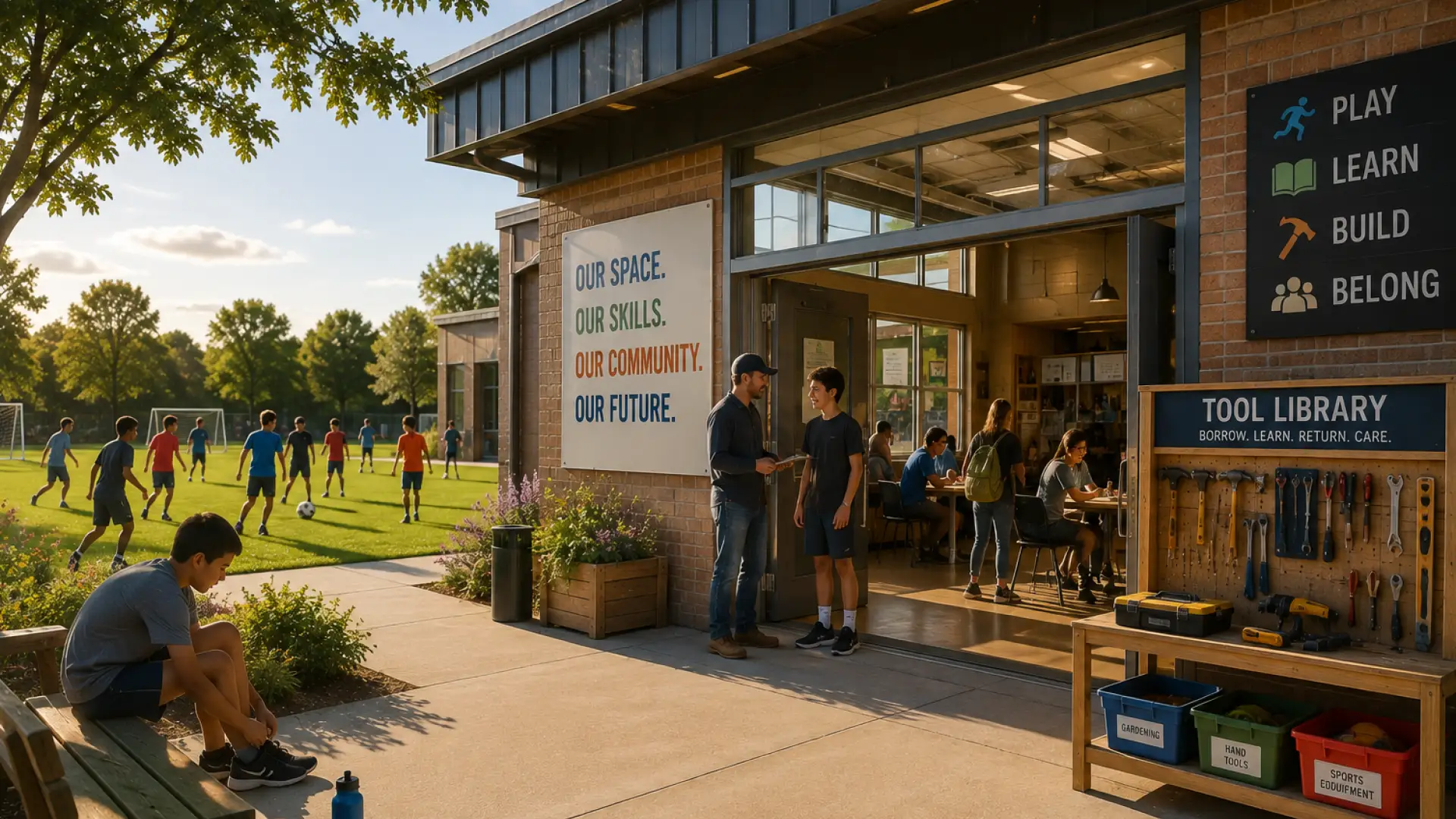
When I was growing up, the schoolyard did not become empty when the final bell rang. Schools were gathering places for the entire community. Children and young adults played sports, families participated in activities, and school facilities remained active during evenings, weekends, and summers.
Today, many public schools, churches, recreation centers, and other community facilities already have fields, gyms, classrooms, playgrounds, kitchens, and equipment. Yet much of this public and community space may be underused outside normal operating hours. At the same time, families are paying thousands of dollars for private sports and activities, while many young people have few affordable opportunities to participate.
Perhaps the greatest shortage is not land or buildings. It may be organized access, supervision, programming, and a better process for using the resources we already have. Path to Unity would like to provide four $25,000 pilot grants to public schools, churches, recreation centers, or other qualified organizations with suitable indoor or outdoor space. Each location would be challenged to create an ongoing program that serves its surrounding community throughout the year.
The programs could include kickball, soccer, basketball, walking groups, chess, board games, arts, music, tutoring, gardening, and neighborhood projects. They should also help youth and young adults develop practical, marketable skills. Local tradespeople, teachers, business owners, retired professionals, parents, and volunteers could teach basic home repair, landscaping, painting, cooking, computer skills, household budgeting, credit, entrepreneurship, workplace preparation, and other useful abilities.
Each pilot could also include a supervised library of tools and shared equipment. Participants could receive basic safety instruction before borrowing hand tools, lawn and garden equipment, home-repair tools, sports equipment, educational materials, or other approved items. A well-run tool library would not simply lend equipment. It would connect access with education, responsibility, maintenance, and neighbors helping one another.
Education does not always have to be expensive. We already have knowledgeable people, useful facilities, tools, and community members who want to learn. Too often, the process connecting those resources is inefficient or wasteful. A person may learn a valuable skill in a few hours, improve it through practice, and eventually use it to obtain employment, earn additional income, maintain a home, or begin a small business.
Path to Unity would not personally operate every activity or run the kickball games. Our role would be to provide transparent funding, challenge local leaders to build the programs, encourage collaboration, and document the results. Participating organizations would agree to appropriate filming and reporting so the public can see what worked, what failed, what the program cost, and whether the model can continue and be reproduced in other communities.
This should be a friendly challenge, not merely a contest for the largest attendance. Success should consider consistent participation, skills taught, tools shared, volunteer involvement, safety, collaboration, cost per participant, community impact, and whether the program can continue after the initial grant. The goal is to test four different approaches, learn from all four, and help the strongest ideas spread.
Questions for the Conversation
Which schools, churches, recreation centers, or public facilities in your community are underused after hours?
What barriers—insurance, staffing, security, transportation, maintenance, or policy—keep these facilities from serving the community?
What combination of sports, games, arts, education, and marketable-skills training would be most useful?
How should a community tool library be operated safely, responsibly, and affordably?
How should the four $25,000 grants be awarded, measured, documented, and sustained?
Do you know an organization with the space, leadership, and desire to participate in this pilot challenge?
0 Comments