
An opening proposal for public discussion
Education should be measured by what students know, what they can do, and whether they are prepared for adult life—not simply by how many years they sat in a classroom.
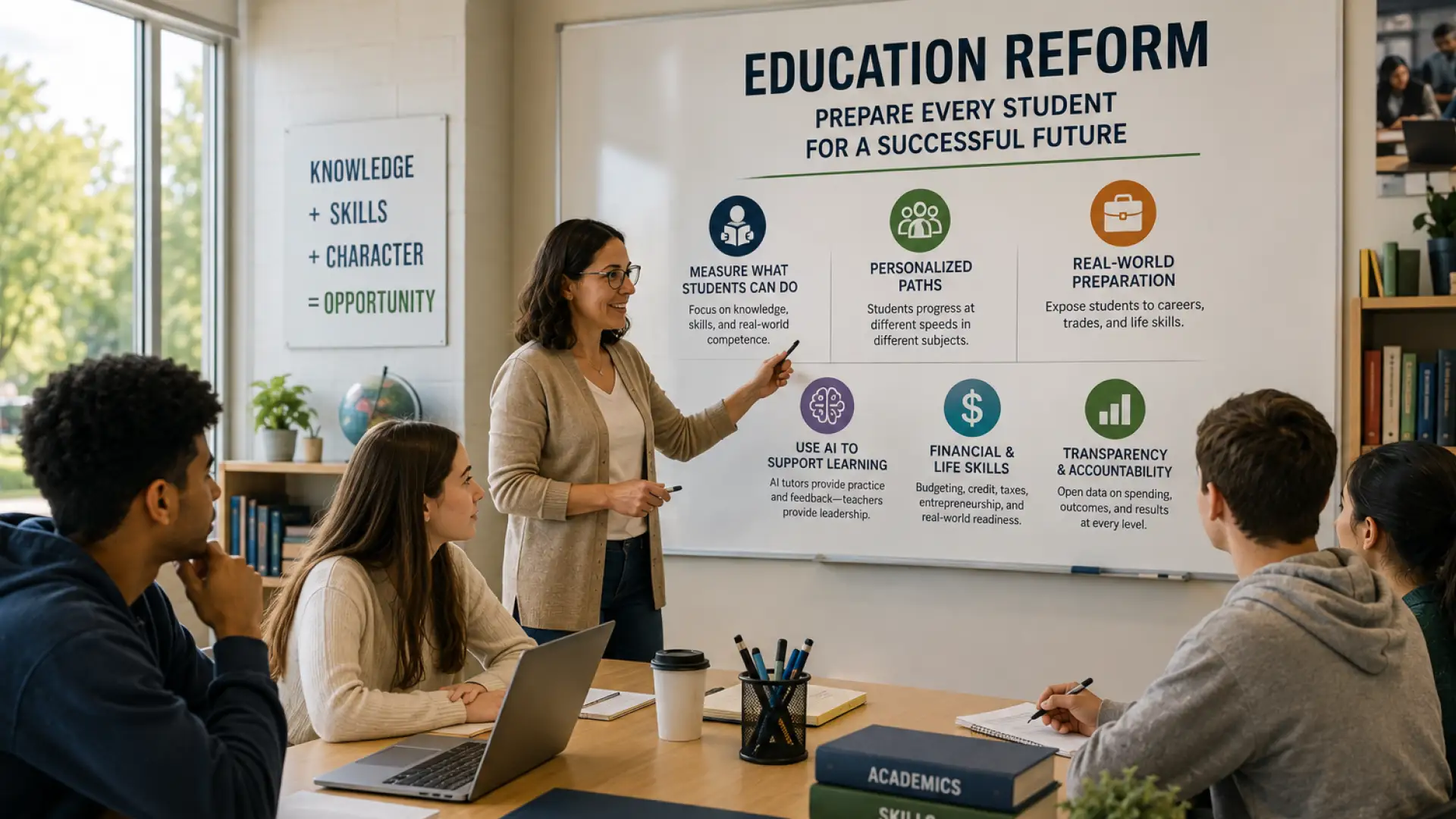
Grades can remain, but they should be accompanied by clear competency reports. Parents and students should know whether a learner can read, write, perform practical mathematics, understand civics, use technology responsibly, manage basic finances, and communicate effectively. Students should be able to progress at different speeds in different subjects instead of being treated as though every child grows in the same way.
AI can provide individual tutoring, practice, and faster feedback under teacher and parental supervision. It should support teachers, not erase their most important role: motivating students, guiding discussion, building judgment, and creating a healthy classroom culture.
Every student should be exposed to trades, technology, healthcare, business, arts, and professional careers before graduation. Apprenticeships and paid work-based learning should become normal options. Financial literacy, household budgeting, taxes, credit, and entrepreneurship should be graduation requirements.
Schools should publish spending by campus, including classroom and administrative costs, along with attendance, outcomes, and graduation results. Colleges should disclose completion rates, typical debt, employment outcomes, and earnings by program. Institutions should share responsibility when students are repeatedly left with high debt and poor prospects.
The guiding question is simple: What knowledge, judgment, and marketable abilities does this student possess?
Questions for the Conversation
What competencies should every student demonstrate before graduation?
How should AI support teachers and students without replacing human guidance?
How much school spending actually reaches classrooms and student services?

0 Comments