
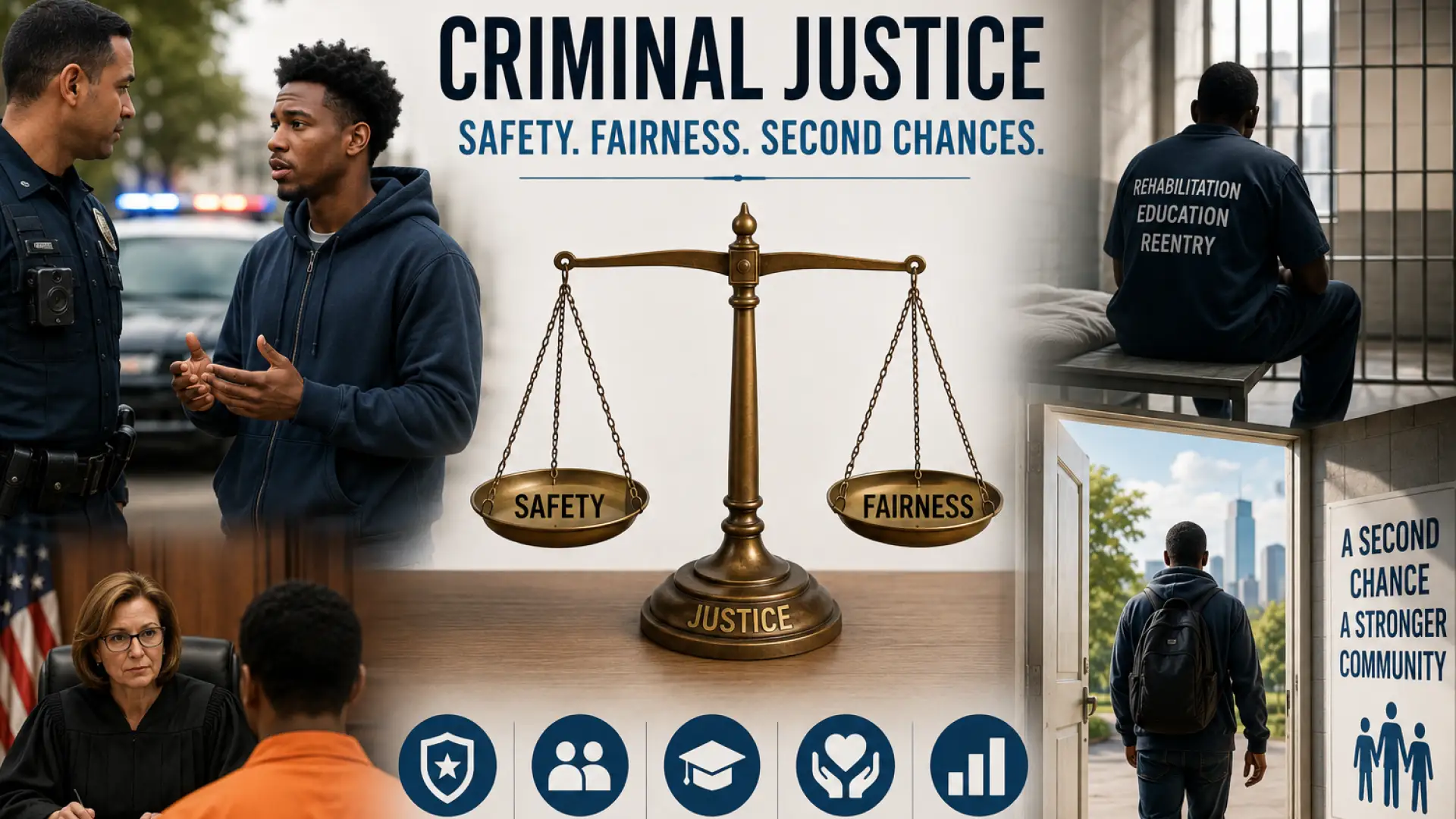
An opening proposal for public discussion
A criminal-justice system must protect the public, respect victims, treat accused people fairly, and create a realistic path back into society for those who complete their sentences.
The starting proposal is to concentrate incarceration resources on violent, dangerous, and repeat offenders. Appropriate nonviolent cases should make greater use of treatment, supervision, restitution, and community-based alternatives. Pretrial detention should be based primarily on danger and flight risk rather than a person’s ability to pay cash bail.
Sentencing outcomes should be published by offense, criminal history, jurisdiction, and other relevant factors so unexplained disparities can be investigated. Body cameras should be required during clearly defined encounters, with public rules for privacy, retention, release, and discipline. Deaths and serious injuries involving law enforcement should receive independent investigation, while due process must protect both citizens and accused officers.
Training should emphasize constitutional rights, de-escalation, mental-health response, and reliable evidence handling. Before release, incarcerated people should have access to identification documents, education, addiction treatment, job training, and employment support. Unnecessary work barriers should be removed after a sentence is completed, while reasonable safeguards remain for sensitive positions.
Victims should receive better information, protection, restitution enforcement, and access to services. Success should be measured through crime reduction, victim safety, fairness, successful reentry, and lower repeat offending—not simply arrest totals or prison occupancy.
Questions for the Conversation
Which offenses require incarceration, and which are better addressed through alternatives?
What information should be public about policing and sentencing outcomes?
Which reentry services most effectively improve public safety?

0 Comments