
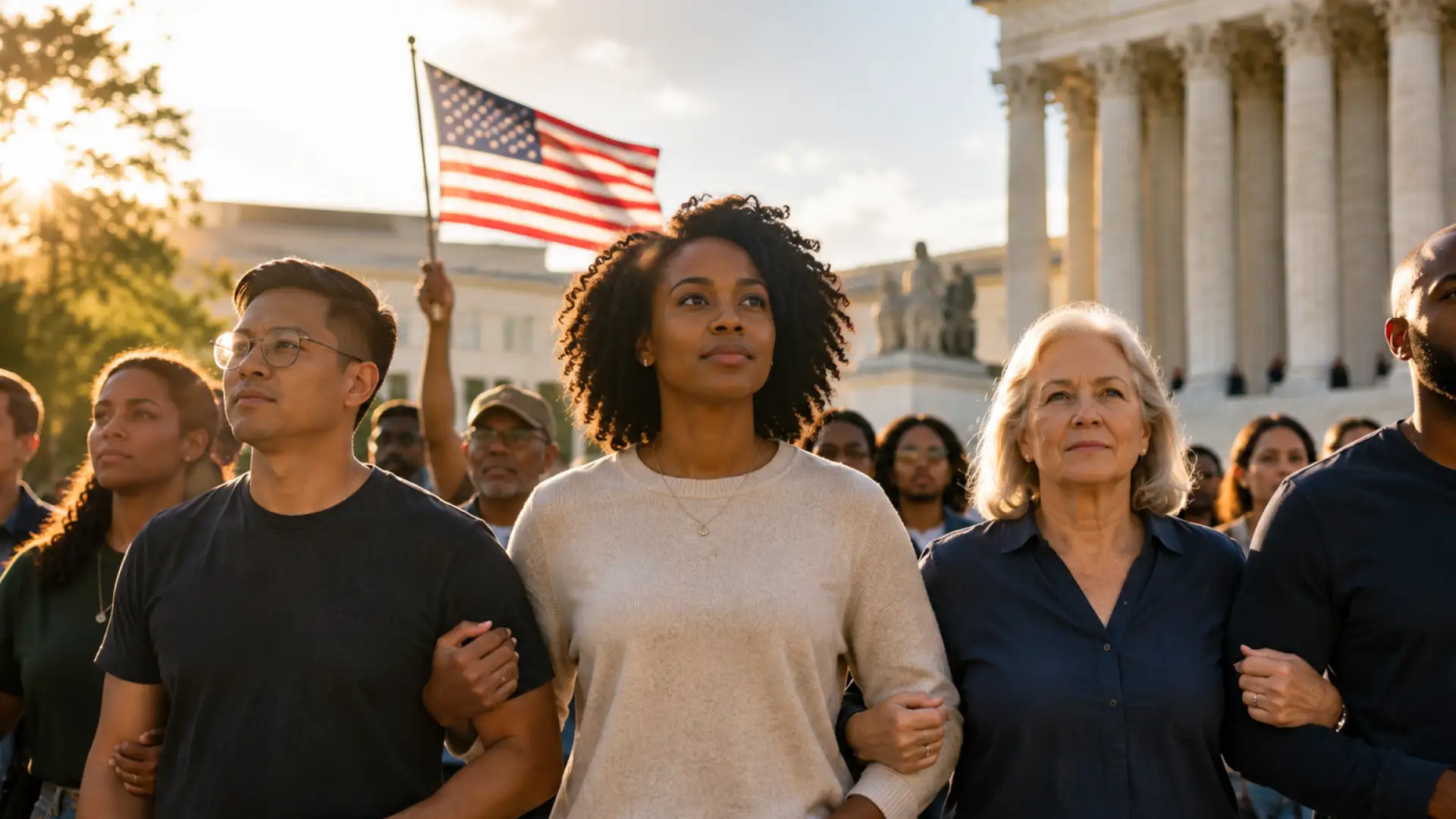
An opening proposal for public discussion
Civil-rights debates become destructive when every disagreement is treated as hatred and every policy is reduced to which group wins. A healthier starting point is equal dignity, equal protection, and individual justice.
Laws against discrimination in employment, education, housing, voting, public services, and disability access should be enforced. Individuals should be judged on their conduct and qualifications whenever reasonably possible. When discrimination is documented, the remedy should address the actual harm rather than automatically labeling every member of a group as either a victim or an offender.
Public assistance and opportunity programs should consider economic hardship, family circumstances, neighborhood conditions, educational opportunity, and documented discrimination. Peaceful speech, religious exercise, association, and disagreement should also be protected—even when the views expressed are unpopular.
LGBTQ+ individuals should be protected from violence, employment discrimination, denial of housing, and denial of ordinary public services. At the same time, difficult questions involving healthcare, schools, athletics, shelters, prisons, and religious liberty may require different rules for different settings. Those rules should be specific, transparent, and open to review rather than imposed through slogans.
Unity does not require pretending that every conflict is simple. It requires discussing the exact policy, listening to those affected, protecting basic rights, and refusing to treat neighbors as enemies.
Questions for the Conversation
How should equal protection be applied when legitimate rights come into conflict?
When should assistance be based on economic need, documented discrimination, or both?
What rules encourage honest disagreement without permitting harassment or exclusion?
0 Comments