
An opening proposal for public discussion
Artificial intelligence and robotics may create one of the greatest periods of progress in human history. They can improve manufacturing, healthcare, education, transportation, agriculture, public safety, and accessibility. They can also disrupt employment, concentrate power, invade privacy, spread false information, and leave people feeling that progress is happening to them rather than for them.
Society should embrace productive technology rather than attempt to stop it. AI can give students individual tutoring, help small businesses perform work that once required much larger staffs, and assist professionals in analyzing complex information. Robots can perform repetitive, physically demanding, and dangerous work. Greater productivity can improve life—but only when the benefits reach more than a small number of companies and individuals.
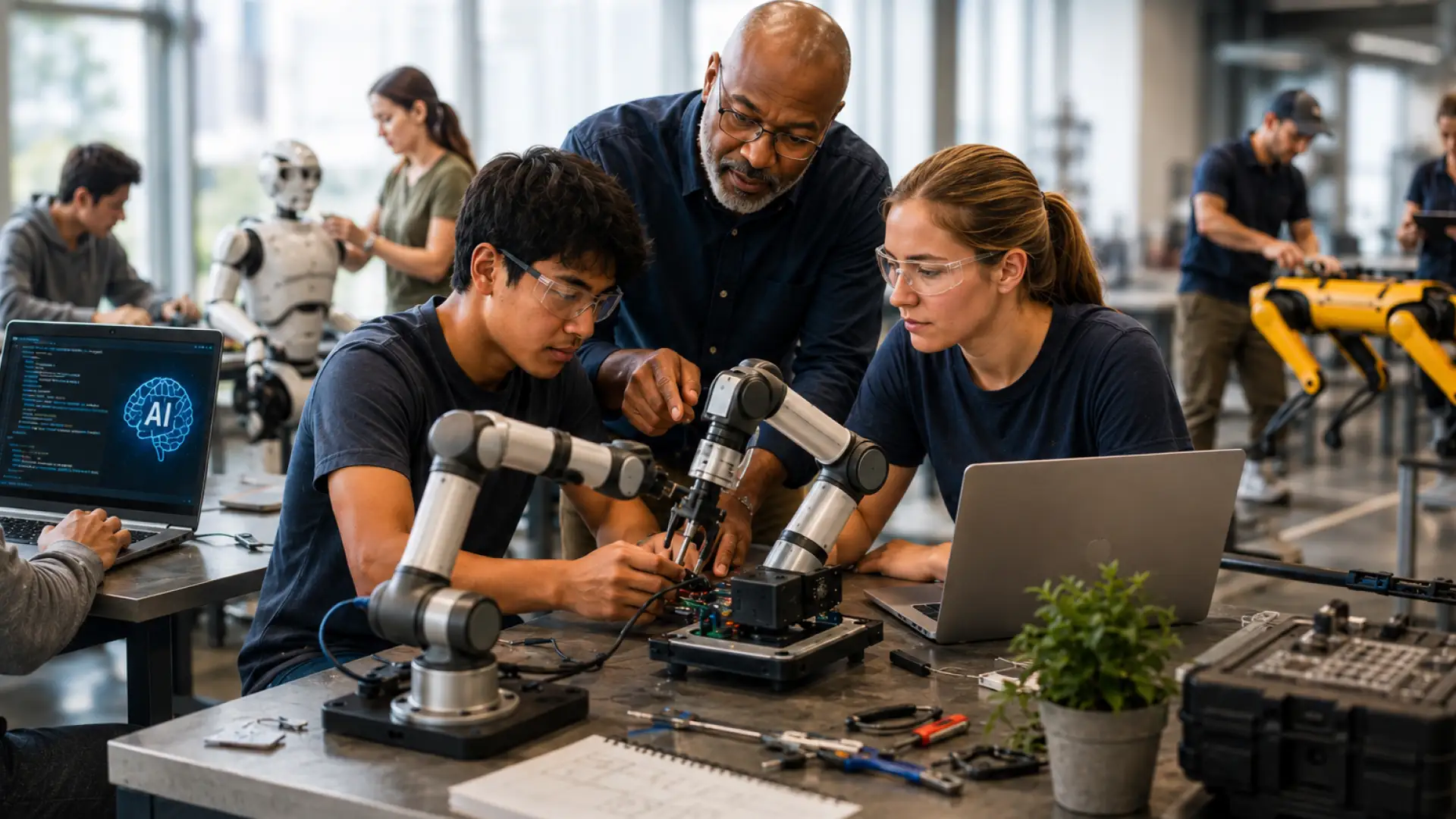
Workers should be participants in the transition, not treated as disposable costs. Schools, employers, trade programs, libraries, churches, and community centers should begin teaching people how to use AI, supervise automated systems, verify results, maintain robotics, protect data, and recognize manipulation. Training should begin before jobs disappear, not after families have lost their income.
Transparency and human accountability must remain central. People should know when AI materially influences decisions involving employment, lending, insurance, healthcare, education, public benefits, law enforcement, or housing. They should be told what the system is doing, what information it uses, who is responsible, how errors can be challenged, and when human review is available. An organization should never escape responsibility by saying, “The computer made the decision.”
Privacy, safety, and human choice also require protection. Organizations should explain what personal information they collect, why they collect it, who receives it, and how long it is retained. Robots used around workers or the public should meet clear safety, cybersecurity, inspection, and emergency-control standards. Decisions involving liberty, medical treatment, use of force, and denial of essential services should never be left to an automated system alone.
Society must also discuss how the gains from automation should be shared. Possible approaches include employee profit-sharing, broader ownership, higher wages tied to productivity, shorter or more flexible work schedules, portable benefits, retraining accounts, and incentives for companies that retrain workers rather than immediately replacing them. Successful companies should be rewarded for innovation, but a stable society cannot allow technology to create enormous wealth while millions of people lose their income, purpose, and opportunity.
AI can strengthen democracy by helping citizens understand laws, budgets, public records, and elected officials. At the same time, it can generate convincing false images, voices, videos, and political messages. Artificially generated political content should be clearly identified, its sponsor disclosed, and automated accounts prevented from pretending to be real citizens.
The choice is not between embracing technology and protecting people. A responsible society must do both. We should encourage innovation, preserve human accountability, protect privacy and safety, prevent excessive concentration of power, prepare people for changing work, and ensure that progress strengthens humanity rather than diminishing it.
Questions for the Conversation
How should society prepare people before AI or robotics significantly changes their jobs?
When should human review and the right to appeal an automated decision be required?
How should productivity gains be shared among companies, workers, consumers, and communities?
What personal information should AI systems be allowed to collect and use?
How should artificially generated political content be identified and regulated?

0 Comments